When most parents hear “speech therapy,” they think: my child isn’t talking yet, or my child can’t pronounce certain sounds. And yes, that’s absolutely part of what we do.
But pediatric speech therapy is a lot bigger than most people realize. And that gap in understanding means a lot of families who could really benefit from it never make the call.
This one’s for them.
What Pediatric Speech Therapy Actually Covers
Speech Sound Delays & Articulation
This is the one people know. If your child is hard to understand, substitutes sounds (“wabbit” for “rabbit”), or is struggling to produce certain sounds at the age when they should have mastered them — that’s articulation work, and it’s squarely in our wheelhouse.
Language Delays
Language is bigger than speech. It covers how a child understands what’s said to them (receptive language) and how they use words, phrases, and sentences to communicate their own thoughts and needs (expressive language). A child can have perfectly clear speech and still struggle with language — finding words, following directions, telling a story, or answering questions.
Early Communication
Not talking yet doesn’t mean there’s nothing to work on. For babies and toddlers, early communication includes babbling, pointing, making eye contact, and using gestures — all the building blocks that come before words. Early intervention in this space makes a significant difference in long-term outcomes.
Social Communication (Pragmatics)
Some children have the vocabulary and the sounds, but struggle with the social side of communication — taking turns in conversation, reading facial expressions, understanding personal space, or knowing what to say in different social situations. This is especially common in children with autism or social language delays, and it’s absolutely something speech therapy addresses.
Fluency & Stuttering
If your child is repeating sounds or words, getting stuck, or showing visible effort when they speak, a speech therapist can help. We work on building fluency and, just as importantly, the confidence and emotional ease that goes along with it.
Feeding & Swallowing
Surprised to see this one? You’re not alone. Feeding challenges — difficulty latching, transitioning to solids, gagging or choking, extreme food aversions, or oral motor weakness — are treated by speech therapists because feeding and communication share the same underlying oral motor systems. (We’ll be doing a full blog on this one soon, because it deserves its own spotlight.)
Voice & Resonance
Persistent hoarseness, a weak or strained voice, or unusual vocal quality can all be addressed through speech therapy. We help children use their voice in healthy, sustainable ways.
The Common Thread
Every area of speech therapy — from first words to fluency to feeding — is about connection. A child’s ability to communicate shapes how they learn, how they form relationships, and how they experience the world around them.
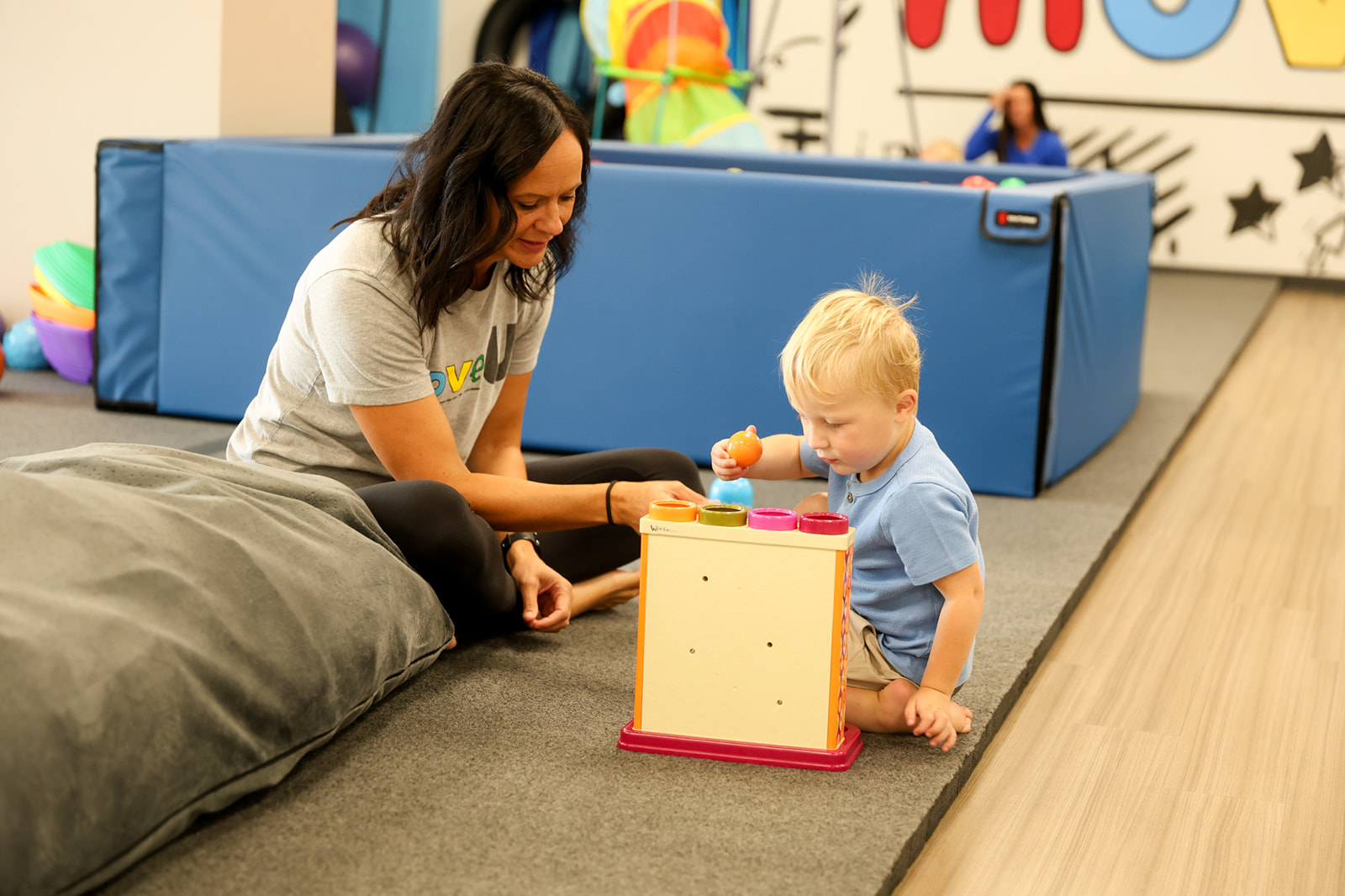
At Move U, Carrie approaches every one of these areas the same way: child-led, play-based, and built around what makes your specific child tick. No two kids get the same plan, because no two kids are the same.
Not Sure If Your Child Qualifies? Just Ask.
That’s what our free parent consultation is for. You describe what you’re seeing, we talk through whether speech therapy could help. A referral from your primary care doctor is required to begin services — reach out to us today if you have questions about getting one or whether services are the right fit.