
Mealtime should be one of the simpler parts of the day. And for a lot of families, it’s anything but.
If you’ve spent meals coaxing, bribing, or white-knuckling your way through another rejected plate — or if your baby has struggled to latch, swallow, or transition to solid foods — you already know how exhausting and isolating feeding challenges can be. Every meal becomes a stress test. And over time, that stress shows up on the whole family.
What a lot of parents don’t know: there’s actual help for this. And it often comes from a speech therapist.
Wait — Why a Speech Therapist for Feeding?
It’s the most common question we get. The short answer: feeding and communication share the same underlying systems. The oral motor skills a child needs to eat — to coordinate sucking, chewing, and swallowing safely — overlap significantly with the skills involved in speech production. Speech-Language Pathologists train extensively in both areas, which is why feeding therapy falls under their scope of practice.
So yes, Carrie handles feeding. And she’s really good at it.
What Feeding Challenges Actually Look Like
Feeding difficulties don’t always look the same. Across different ages, parents come to us describing things like:
In infants:
- Difficulty latching or sustaining a latch during breastfeeding or bottle feeding
- Coughing, choking, or sputtering during feeds
- Fatigue during feeding — falling asleep, losing suction, or taking very long to finish
- Slow weight gain that’s connected to feeding difficulty
During the transition to solids:
- Strong gagging or vomiting when new textures are introduced
- Refusal to move past purees
- Difficulty chewing or managing food in the mouth
- Choking more than typical on solid foods
In toddlers and older children:
- Extreme food aversions that go beyond normal pickiness
- Accepting only a very limited range of foods (by color, texture, brand, or temperature)
- Gagging at the sight or smell of certain foods — before eating even begins
- Mealtime meltdowns or anxiety that feels disproportionate
- Difficulty at school or social settings where food is involved
If any of those feel familiar — you’re not imagining it, and you’re not alone.
The Sensory Piece
A lot of feeding challenges have a sensory component. For children with sensory sensitivities, certain textures, temperatures, smells, or even the visual appearance of food can trigger a genuine stress response in the nervous system — not a behavioral choice, but a physiological reaction.
This is where Move U’s approach really shines. Carrie’s sessions are built around a sensory-smart, no-pressure framework. We never force. We never push. We build tolerance and comfort gradually, at a pace that respects your child’s nervous system and actually produces lasting change.
What Feeding Therapy Looks Like at Move U
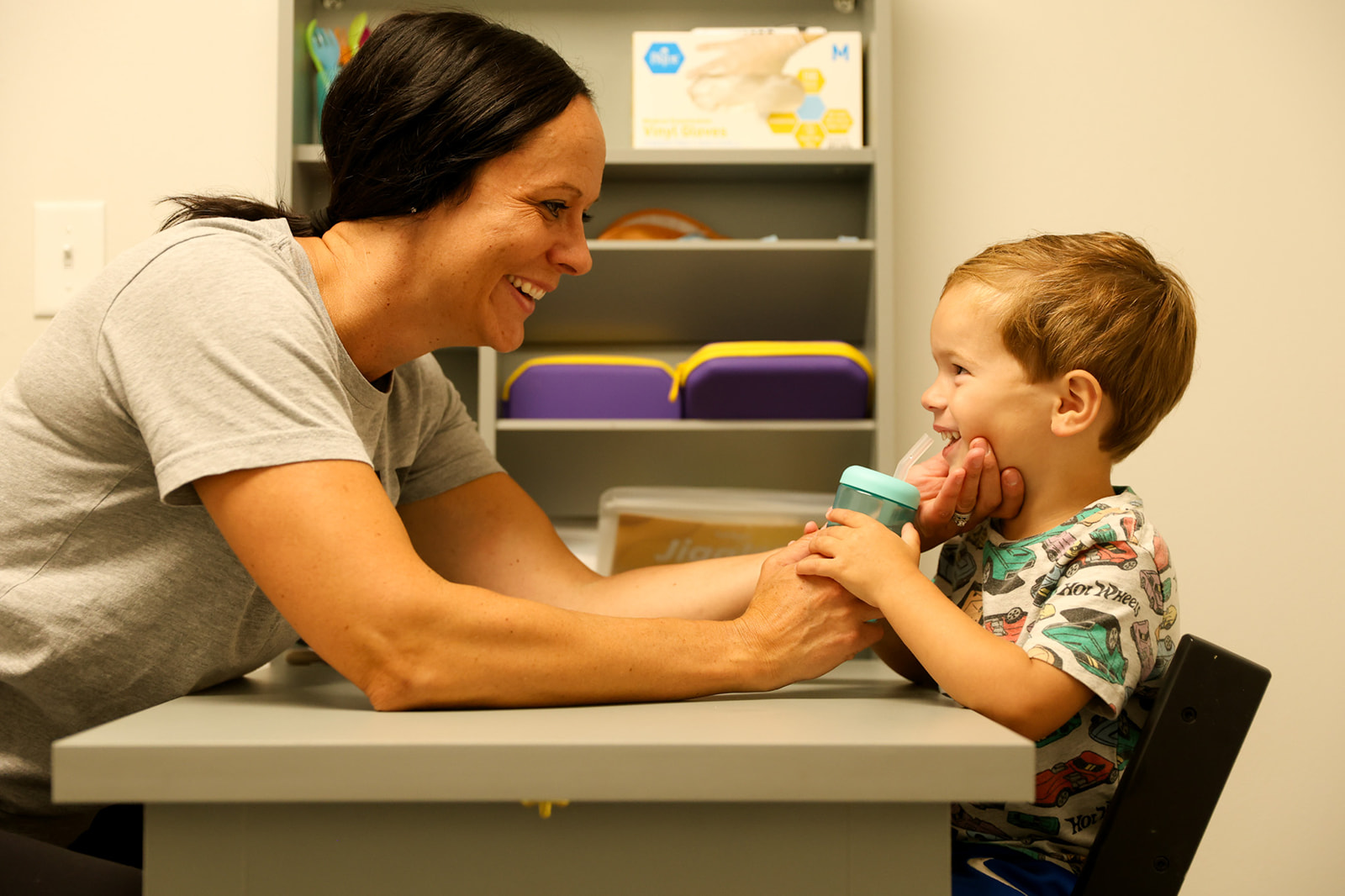
Just like our speech and language sessions, feeding therapy at Move U is child-led and play-based. We meet your child where they are and build from there.
Depending on your child, sessions might include:
- Oral motor exercises to build the strength and coordination needed for eating
- Gradual, pressure-free food exploration starting with what your child is already comfortable with
- Sensory desensitization activities that make new textures feel less threatening
- Strategies to reduce mealtime anxiety for both your child and your family
- Parent coaching so you have tools to support progress at every meal, not just therapy days
The goal isn’t to get your child to eat everything. The goal is to make mealtimes manageable, safe, and eventually — even enjoyable.
When to Reach Out
If mealtimes are consistently stressful, if your child’s diet is so restricted it’s affecting their nutrition or social life, or if you have any concerns about the mechanics of how your child eats or swallows — it’s worth a conversation. A referral from your primary care doctor is required to begin services. Reach out to schedule a consult with us today if you have questions about your need for services or how to get a referral.
Bring your questions, your food logs, your mealtime stories. We’ve heard it all, and we’re here to help.