Every child trips and tumbles now and then. It’s part of being a kid. But if you’ve noticed your child falling more than their peers — tripping over flat surfaces, falling out of chairs, stumbling through situations other kids handle without a second thought — that’s something worth paying attention to.
Frequent falls in children usually aren’t due to clumsiness. They’re often a signal from the body that something in the movement system needs support.
What’s Actually Behind Frequent Falls?
Balance and coordination depend on a complex system: the brain, the muscles, the joints, and the sensory systems all working together in real time. When any piece of that puzzle isn’t functioning well, falling becomes more common. Some of the most frequent contributors include:
- Low muscle tone — when muscles fatigue quickly or don’t generate enough stability to control movement
- Proprioceptive challenges — difficulty sensing where the body is in space, making it hard to predict and respond to movement
- Core weakness — a weak core makes it hard to stay upright and recover when balance is disrupted
- Vestibular processing differences — how the inner ear communicates balance information to the brain
- Hip and ankle instability — joint weakness that affects how the foot meets the ground
- Neuromuscular conditions — like hypotonia, cerebral palsy, or others that affect muscle and movement control
A pediatric physical therapist can help identify exactly what’s contributing and build a targeted plan to address it.
What PT Does About It
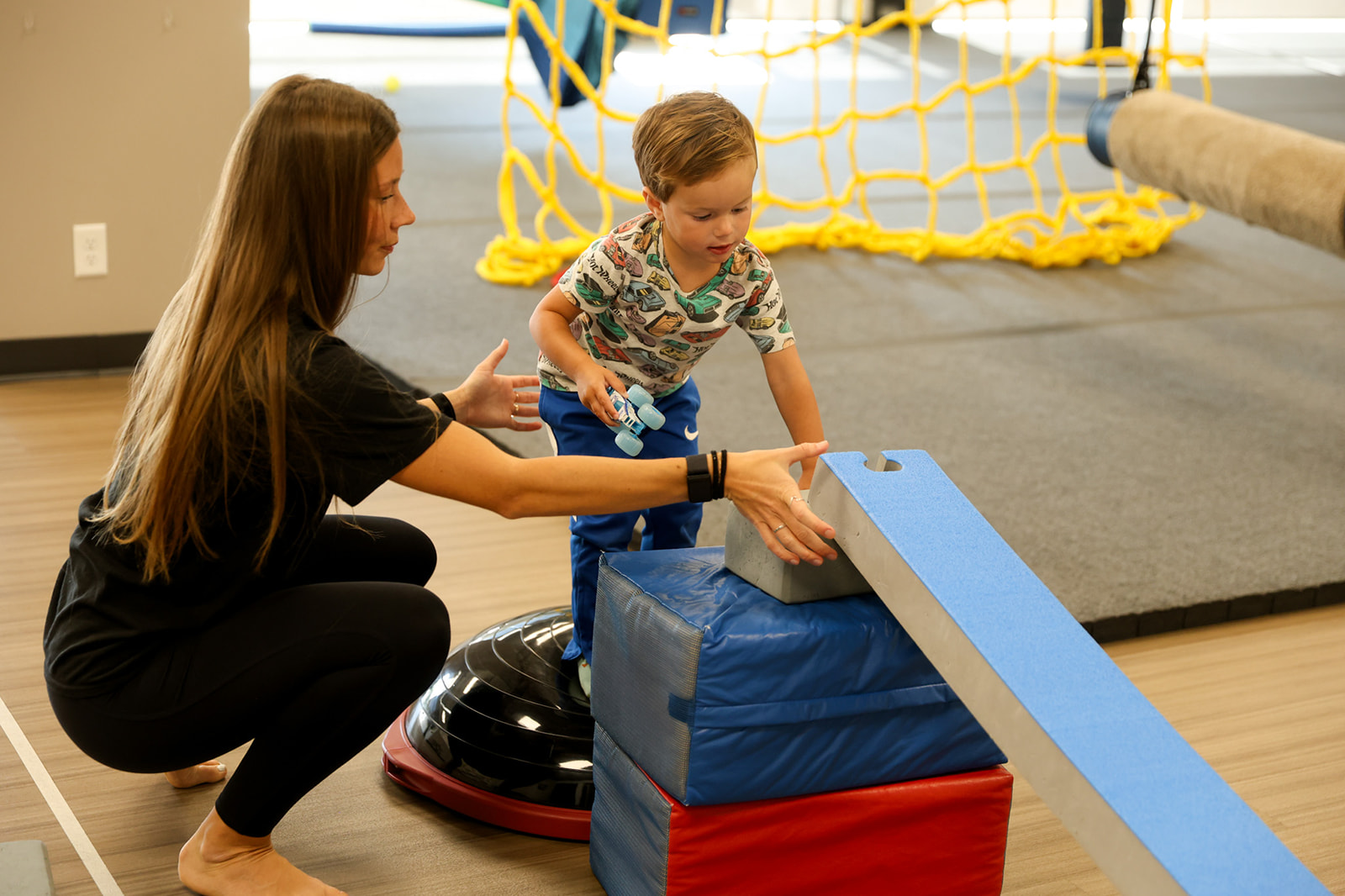
At Move U, we assess the full picture of how your child moves — not just where they’re falling down, but why. From there, we work on building the strength, body awareness, and coordination their system needs to move with more confidence and control.
And because kids learn best through play, all of it happens in a way that feels fun, not frustrating. We partner with you so you’re equipped to support their progress every day, not just in the clinic.
When to Reach Out
If your child’s falls are frequent, are causing injury, are getting worse, or are affecting their confidence in daily activities — it’s time to get some answers. You don’t need a referral, and you don’t need certainty. Just reach out.
Let’s figure out what’s behind the falls — and build a path forward.