Some kids just run out of steam faster than others. But if your child is consistently the first to sit out at the playground, struggles to keep up during sports, or comes home from school completely wiped from activities their peers handle easily — there’s often more to the story than needing a snack.
In many cases, a child who tires easily isn’t just low on energy. Their body may be working a lot harder than it should be to do things that should feel effortless.
Why Some Kids Fatigue Faster
Physical endurance in children depends on efficient movement. When the underlying systems aren’t working optimally — muscle tone, core stability, posture, coordination — the body compensates. And compensation is exhausting.
- Low muscle tone (hypotonia) — muscles that tire more quickly and require more effort to sustain movement
- Poor core endurance — without a strong core, even sitting upright at a desk takes extra work
- Inefficient gait or movement patterns — when the body moves in compensatory ways, it burns more energy
- Neuromuscular diagnoses — conditions like Down Syndrome, Cerebral Palsy, or Spina Bifida often affect endurance alongside mobility
- Deconditioning — sometimes kids who have avoided physical activity because it’s hard develop a cycle that’s worth breaking
Signs This Might Be a Movement Issue
- Your child avoids active play or always wants to be carried
- They’re out of breath or sitting out well before other kids their age
- They complain their legs hurt or “don’t work” after short periods of activity
- They slump, slide, or hang off furniture when sitting
- They’re exhausted by the school day in a way that feels disproportionate
How PT Can Help
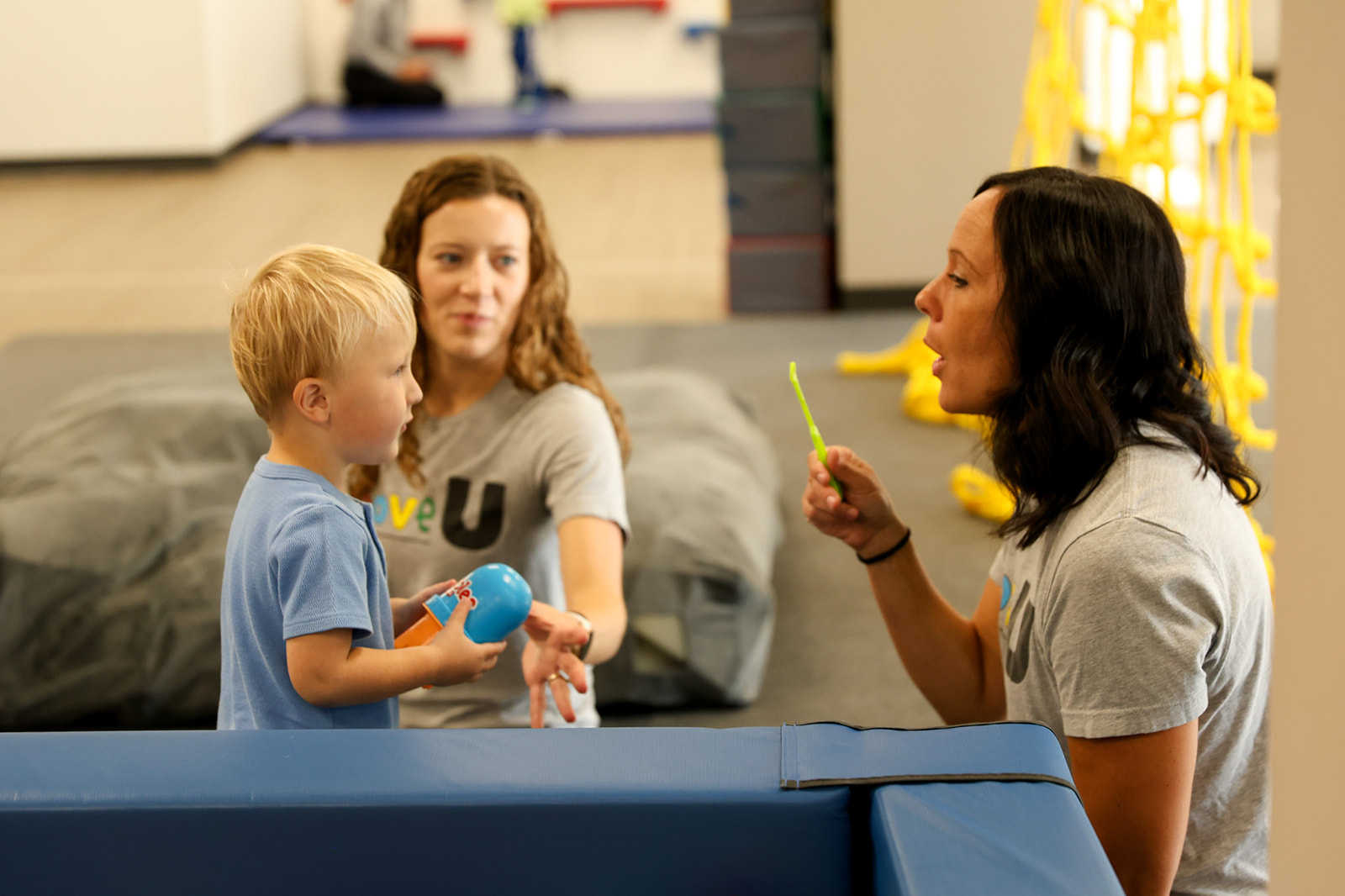
At Move U, we figure out what’s driving the fatigue — whether that’s tone, core strength, coordination, endurance, or something else — and build a play-based plan to address it. The goal is a body that moves more efficiently, tires less easily, and feels capable enough to say yes to the things kids want to do.