Balance and coordination are two of the most foundational physical skills a child develops — and two of the most commonly overlooked when they’re not developing well.
Every child has moments of wobbling, bumping into things, or fumbling a catch. But when those moments are frequent, consistent, or affecting a child’s confidence and participation in daily activities, it’s worth a closer look.
Balance vs. Coordination: What’s the Difference?
Balance is the ability to maintain control of the body’s position — standing on one foot, walking a curb, staying upright on uneven ground.
Coordination is the ability to use different parts of the body together smoothly and accurately — kicking a ball, catching, riding a bike, cutting with scissors.
Both rely on the brain, the muscles, and the sensory systems — especially proprioception (body awareness) and the vestibular system (inner ear balance) — working together in real time.
Signs of Balance and Coordination Challenges
- Frequent tripping, stumbling, or falling on flat surfaces
- Difficulty with stairs, curbs, or uneven terrain
- Trouble with bike riding, jumping, or catching a ball
- Avoidance of playground equipment or physical games
- Clumsiness that seems excessive for their age
- Difficulty with tasks that require two sides of the body working together
What Pediatric PT Does
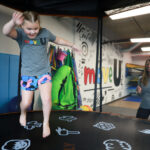
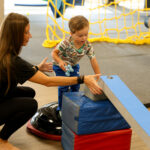
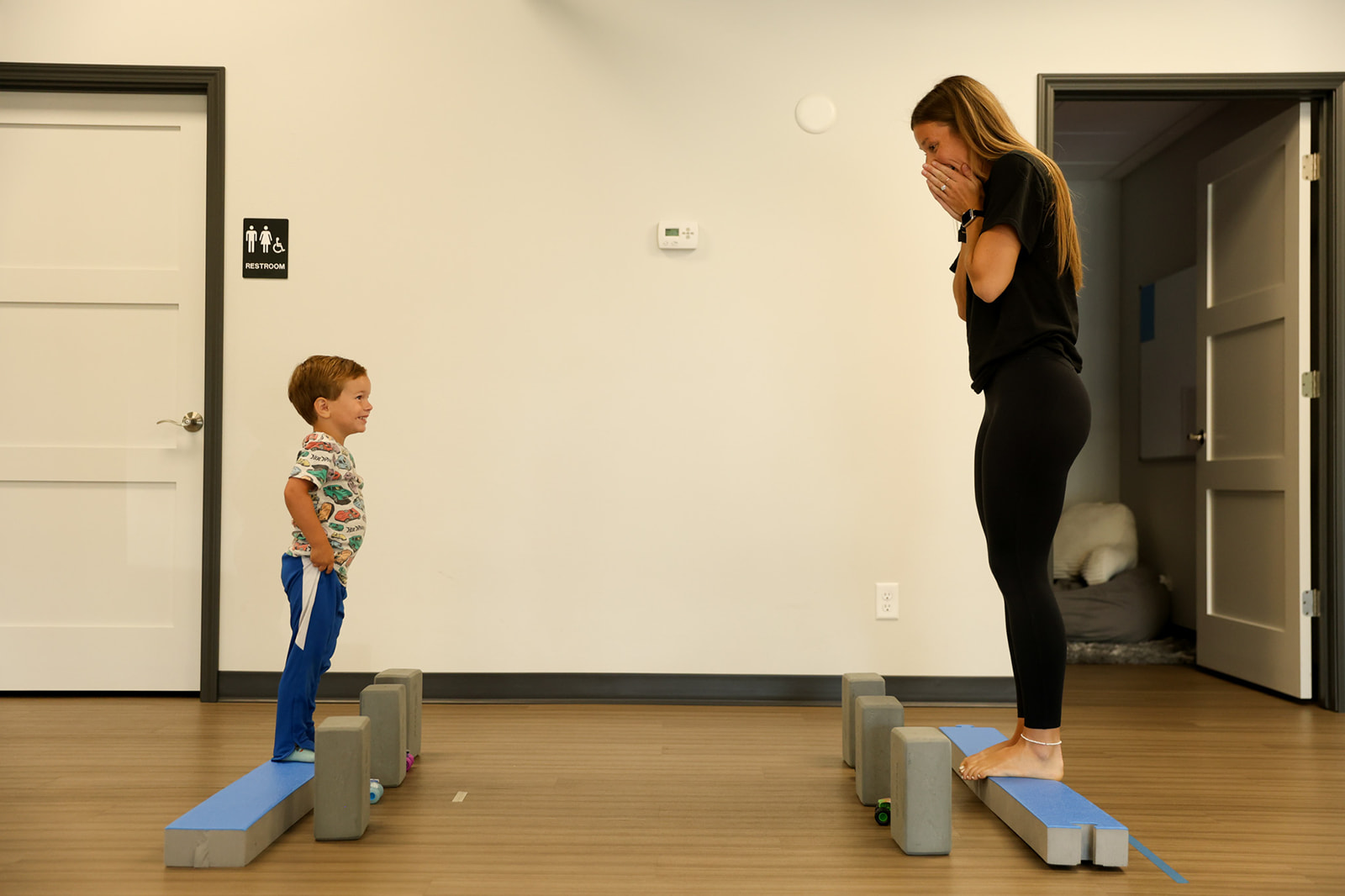
At Move U, we assess balance and coordination as part of a full picture of how your child moves. Using play-based activities, we target the specific systems that need support — whether that’s core strength, body awareness, motor planning, or sensory integration — and build skills that transfer to real life.
Kids often don’t even realize they’re working on balance when they’re climbing through an obstacle course or playing catching games. That’s exactly the point.
Balance and coordination can be built. We’re here to help.