Why Is Tummy Time So Important for Your Baby?
Tummy time is one of your baby’s very first and most important sensory-motor experiences. Any supervised time your baby spends awake on their belly — whether on the floor, on your chest, or across your lap — provides valuable sensory input and strengthening opportunities.
These early experiences help your baby’s nervous system learn how their body feels and moves in space, creating the foundation for future movement skills.
How Tummy Time Supports Development
During tummy time, babies work against gravity, strengthening essential muscle groups including:
- Neck and upper back muscles
- Shoulders and arms
- Core muscles
- Hips and legs
As tummy time becomes easier, babies begin to:
✔ Lift and turn their head
✔ Push up through their arms
✔ Shift weight to reach for toys
✔ Explore movement with confidence
These skills directly prepare babies for important milestones like rolling, sitting, crawling, and independent movement between positions.
The Sensory Connection: Why Regulation Matters
Tummy time is most effective when babies feel safe and regulated. When your baby feels calm and supported, they are more likely to:
- Activate muscles effectively
- Explore movement
- Build confidence using their body
A regulated baby learns faster because movement feels successful rather than frustrating.
How to Make Tummy Time Successful at Home
Think of tummy time as frequent, supported, and playful rather than long structured sessions.
Try These Parent-Friendly Tips:
- Start with short, frequent sessions throughout the day
- Use tummy time on a caregiver’s chest to improve tolerance and bonding
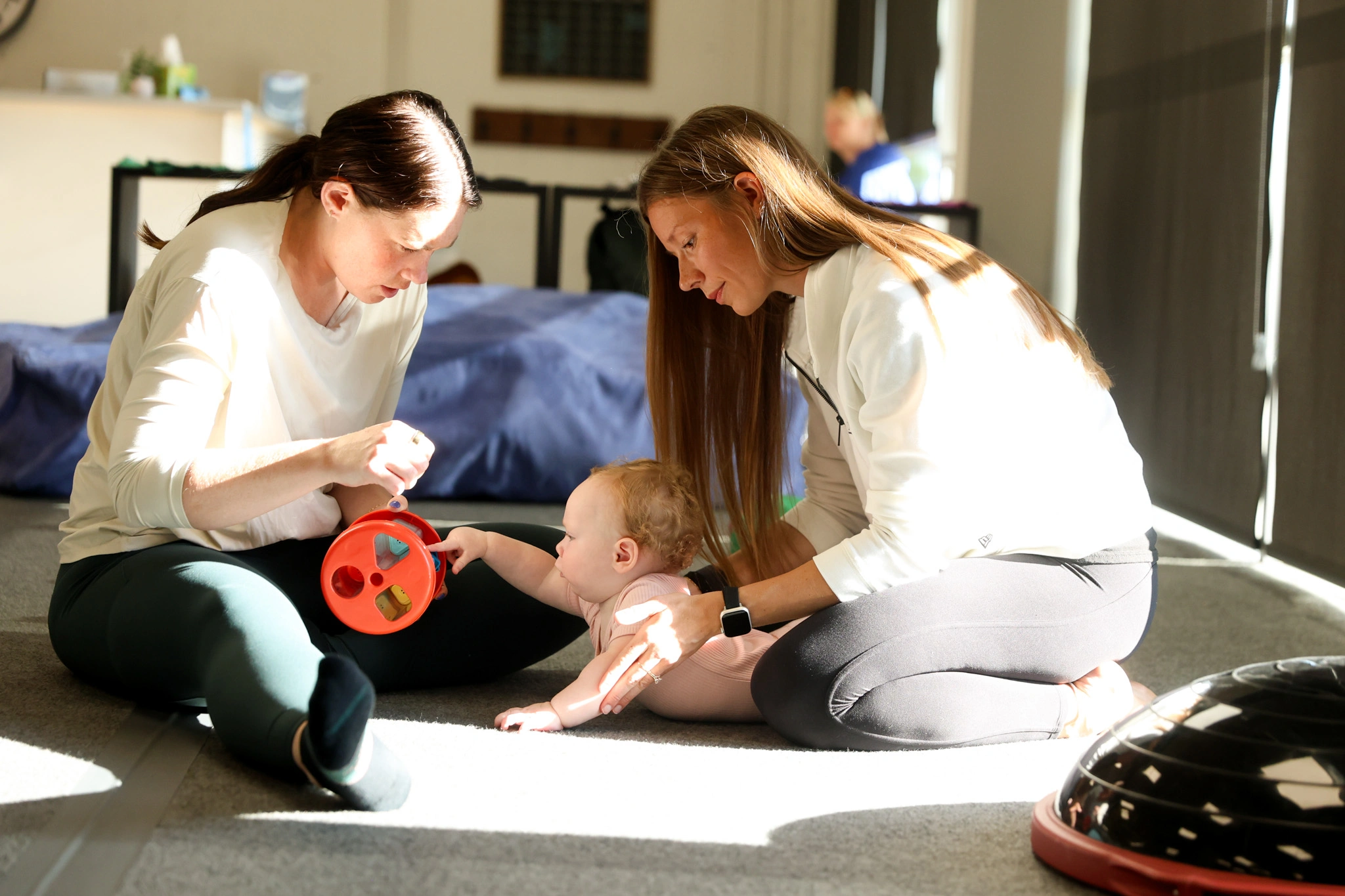
- Get face-to-face to motivate and comfort your baby
- Add songs, mirrors, or gentle movement for engagement
- Place a supportive hand over your baby’s lower body to help with head lifting and arm support
- By around 3 months of age, aim for about 60 total minutes daily, broken into small sessions
Consistency matters more than duration.
When Should You Consider Pediatric Physical Therapy?
If you’ve tried tummy time strategies and still notice concerns, a pediatric physical therapy evaluation may help.
Consider support if your baby:
- Strongly dislikes tummy time
- Keeps their head turned to one side
- Has difficulty lifting their head
- Appears stiff or very floppy
- Is delayed in early motor milestones
Early guidance can make tummy time easier and more enjoyable for both baby and parent.
How Pediatric Physical Therapy Helps Infants
At Move U Pediatric Therapy in Sioux Falls, pediatric physical therapy focuses on supporting development through playful, relationship-based movement experiences.
Therapists help by:
- Identifying underlying movement or sensory challenges
- Teaching positioning strategies that improve comfort
- Supporting strength and coordination development
- Providing individualized home strategies for families
Sessions are designed to feel natural and engaging while helping babies build the skills needed for future milestones.
Supporting Your Baby’s Development in Sioux Falls, SD
Tummy time is more than an activity — it is the foundation for movement, confidence, and exploration.
If you have questions about your baby’s motor development or tummy time tolerance, pediatric physical therapy can provide reassurance, education, and personalized support.
📞 Call 605-409-9533 to schedule an infant evaluation at Move U Pediatric Therapy in Sioux Falls.
Final Thoughts
Small moments of movement today create big developmental gains tomorrow. With the right support, tummy time can become a positive experience that helps your baby grow stronger, more confident, and ready to explore the world.
Reference
Hewitt L, Kerr E, Stanley RM, Okely AD. Tummy time and infant health outcomes: a systematic review. Pediatrics. 2020;145(6):e20192168.