Every parent has Googled it at least once: “Is my child developing on track?” Maybe you noticed your baby isn’t rolling yet. Maybe your toddler seems clumsier than other kids at the park. Maybe your gut is just telling you something’s off — and you’re not sure whether to wait it out or do something.
First: you’re not overreacting. And second: you’re not alone.
Developmental delays in movement are more common than most people realize — and the earlier they’re spotted, the better the outcome. Here’s what to look for, and what it actually means.
What Is a Motor Developmental Delay?
A motor developmental delay simply means a child isn’t reaching movement milestones within the typical age range. These milestones — rolling, sitting, crawling, walking — exist because most children develop skills in a predictable sequence, each one building on the last.
When a child isn’t hitting those markers, it doesn’t automatically mean something is seriously wrong. But it does mean their body may need some extra support to build the strength, coordination, or balance it needs to catch up.
Signs That Might Be Worth a Closer Look
Children develop at their own pace — and that’s completely normal. But there are some patterns that pediatric physical therapists watch for:
In babies (0–12 months):
- Not lifting their head during tummy time by 4 months
- Difficulty rolling from back to tummy (or tummy to back) by 6 months
- Not sitting independently by 9 months
- Showing a strong preference for turning their head only one direction
- Seeming unusually floppy or, on the other end, very stiff
In toddlers (1–3 years):
- Not pulling to stand or cruising along furniture by 12 months
- Not walking independently by 15–18 months
- Frequent falling or difficulty with balance
- Walking on tiptoes consistently after age 2
- Avoiding certain movements or physical play
In older children:
- Difficulty with coordination, jumping, or climbing
- Tiring quickly during physical activity
- Trouble keeping up with peers during play
- Poor posture or difficulty sitting upright for activities
Again, one item on this list doesn’t mean there’s a problem. But if something here resonates, it’s worth talking to someone who knows what to look for.
“Should I Wait and See?”
This is one of the most common things we hear from parents — and it makes complete sense. Nobody wants to jump to conclusions.
But here’s what we know: early intervention in pediatric physical therapy consistently leads to better outcomes. The brain and body are incredibly adaptable in early childhood. The window to build foundational movement skills is real — and the sooner a child gets support, the more naturally those skills tend to develop.
Waiting can sometimes mean missing that window. A quick evaluation gives you answers either way — and peace of mind is always worth it.
What Pediatric PT Looks Like at Move U
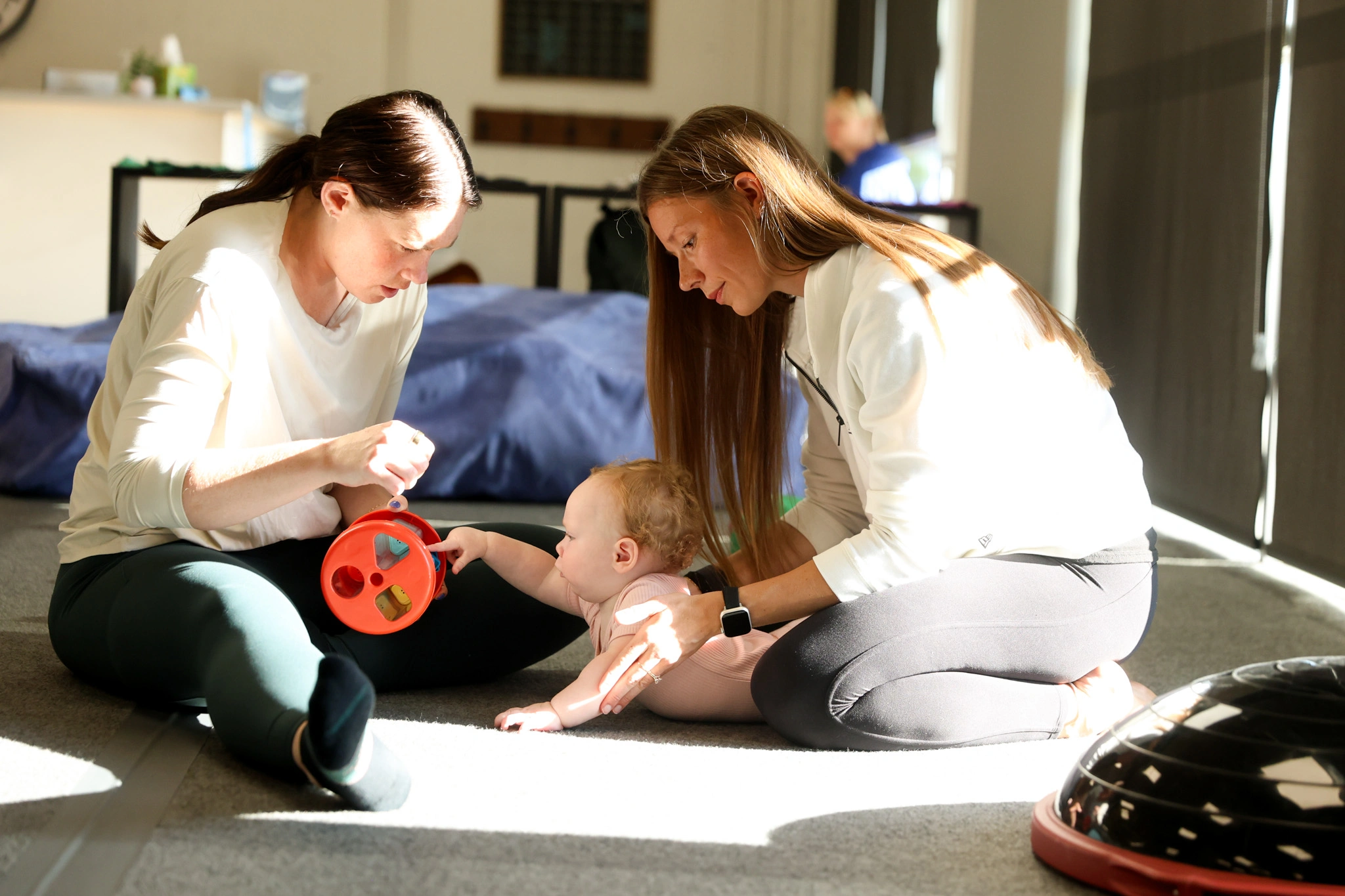
At Move U, a pediatric physical therapy evaluation isn’t stressful or clinical. It’s play-based and designed to feel comfortable for both your child and you.
Our therapists observe how your child moves, where they’re strong, and where their body might need extra support. From there, we build a completely individualized plan — because no two kids are the same.
And we don’t just work with your child in the clinic. We partner with you, so you feel equipped and confident to support their development at home, too.
Ready to Get Some Answers?
If something in this post resonated with you, we’d love to connect. We offer free 20-minute parent consultations — no commitment, just a conversation.