The playground tells us a lot. If you’ve noticed your child consistently lagging behind during physical activities — running slower, jumping lower, climbing more cautiously, or avoiding the equipment their classmates love — it can be hard to know what to make of it.
Sometimes it’s temperament. But when the physical gap between your child and their peers is noticeable and consistent, there’s often a movement reason behind it — and movement reasons respond really well to pediatric physical therapy.
What “Keeping Up” Actually Requires
Physical play with peers involves a complex mix of skills: strength, coordination, endurance, balance, body awareness, and the ability to plan and execute movement quickly. When any of those components is underdeveloped, kids can’t keep pace — even when they want to.
- Gross motor delays — foundational skills like running, jumping, and climbing that aren’t developing on schedule
- Balance and coordination differences that make agile play more difficult or tiring
- Low tone or core weakness that limits speed, power, and endurance
- Motor planning challenges — difficulty figuring out how to move through new or complex physical situations
- Neuromuscular conditions affecting overall physical function
Why It Matters Beyond the Playground
When kids can’t keep up physically, they often pull back from group play. And pulling back from group play affects friendships, confidence, and social development — not just physical fitness. The sooner the movement piece gets addressed, the more of those experiences a child gets to fully participate in.
What We Do About It
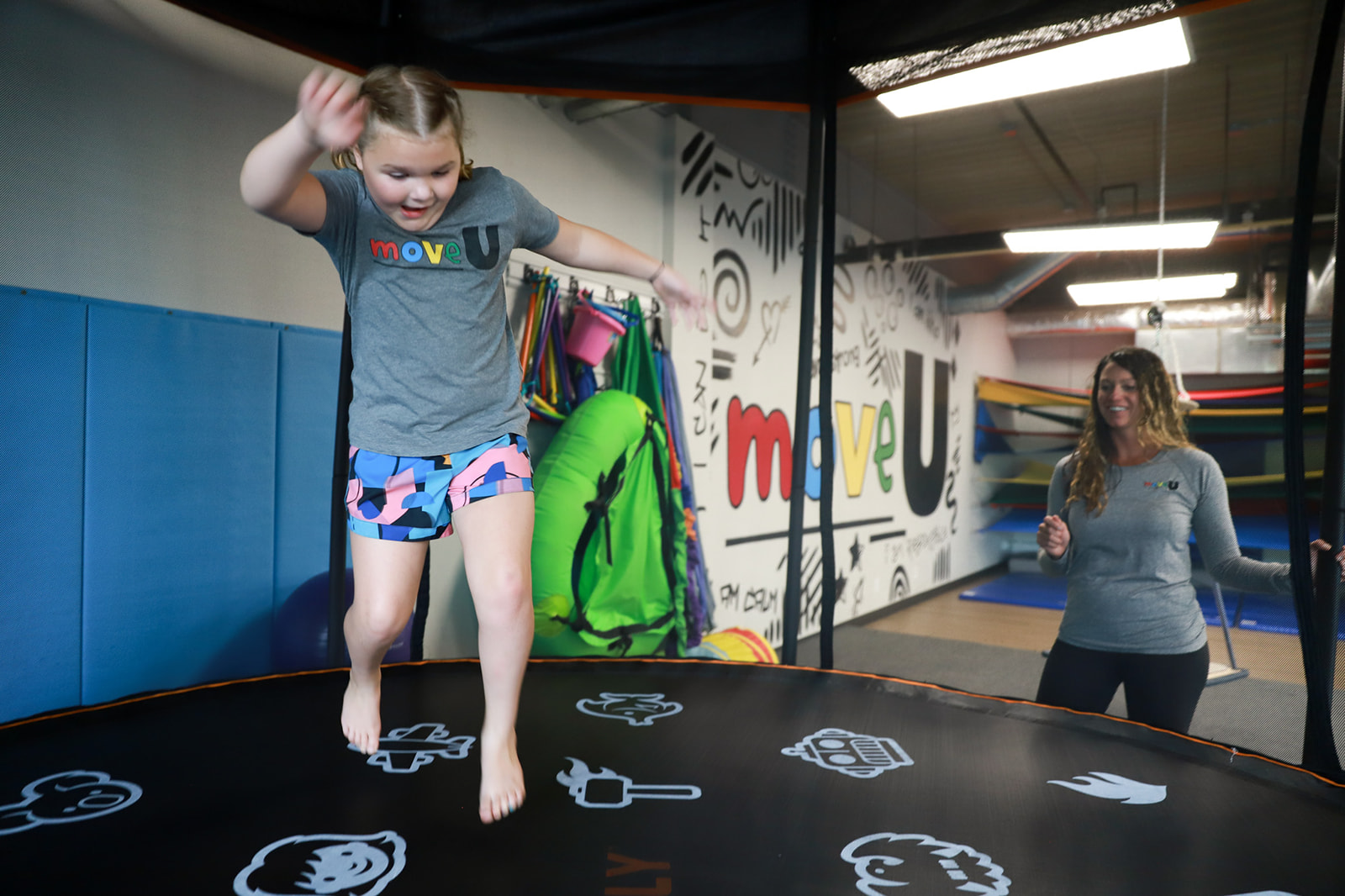
Move U’s pediatric physical therapists assess exactly where the gaps are and build a play-based plan that targets the underlying skills — not just the symptoms. We set goals that matter in real life: keeping up at recess, joining in at birthday parties, feeling capable and confident in their body.